The GB-4000 & M.O.P.A. are 20 Megahertz
capable. The M.O.P.A. also has a built in variable RF carrier frequency of 2.2 to 3.8 MHz and is a 1930's/1950's replica capable of outputting 8
Frequencies Simultaneously.
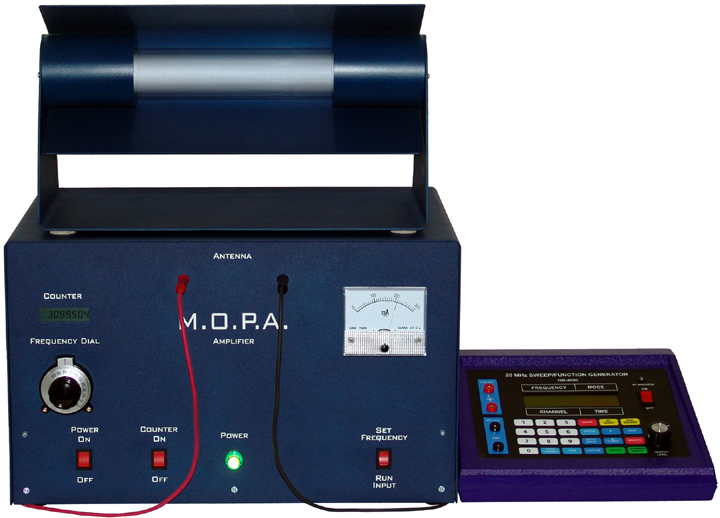
(GB-4000 - M.O.P.A. - 6-Page Technical Specs Brochure) |
(GB-4000 - SR-4 - M.O.P.A. - Complete 22-Page Brochure) |
The M.O.P.A. or Master Oscillator Power Amplifier uses the gas-filled plasma tube radiant non-contact method of outputting frequencies from 1 to 20 million Hertz which is the largest frequency range in the industry. Many people ask what are the benefits of the M.O.P.A. over the SR-4 amplifier?
First: The M.O.P.A. uses the plasma tube method. The plasma tube method allows for a greater power output of 190-watts compared to the SR-4's 15-watts output.
Second: the M.O.P.A. for the first time since the 1930s, allows for the use of high frequencies directly output through the plasma tube. This has been a long sought after feature that many have been asking for. If you are wanting to use the more powerful, versatile 1930's/1950's radiant method, then the M.O.P.A. amplifier is the instrument you will want to own.
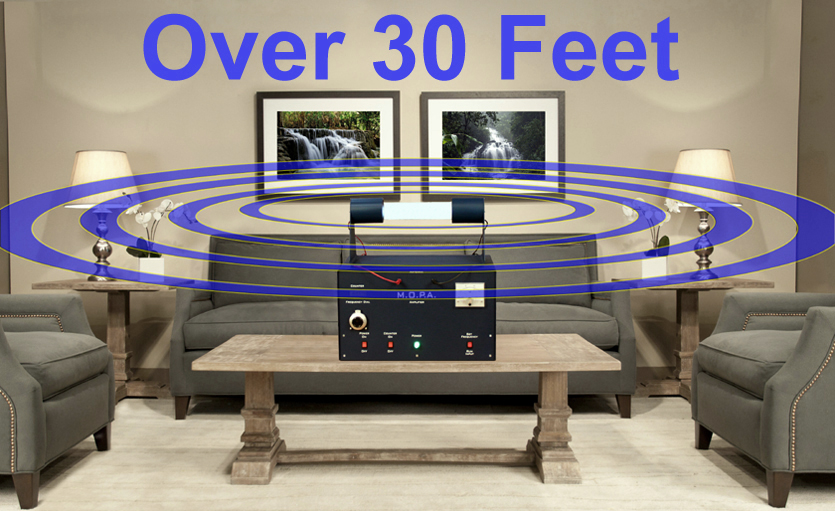
When it comes to power the GB-4000, SR-4, and M.O.P.A. should be considered as good, better and best. If your budget only allows for the GB-4000 then you have one of the best frequency generators you can purchase. If your budget allows for the GB-4000 and SR-4 amplifier then you move up to the next level of performance. If you can afford the GB-4000 and M.O.P.A. amplifier then you know you have the very best, highest frequency range, plasma tube system on the market today. It has over a 30-foot radius like the original 1930s/1950s instruments. You also have a system that can output both the 1930's/1950's frequencies through a plasma tube. Only purchase what you can afford because you can always add the SR-4 or M.O.P.A. amplifier at a later date.
 |
The M.O.P.A. Amplifier/Oscillator Technical Specifications and Features........
- Warranty: Two year parts and labor. (Only exception - 90 days
on internal 812a vacuum tube).
- Fabrication: Built by hand and tested for quality assurance.
- Proven design: Solid state combined with vacuum tube technology used for over 80 years.
- Amplification method: Original vacuum tube amplification.
- Amplification voltage: High voltage (1350 volts).
- Amplification current : Low current (20 to 240 milliamps for greatest 812a vacuum tube life).
- Power output: Variable average modulated power of 190-watts.
- Milliamp meter: Built in.
- Vacuum tube vs Solid state amplification: Modern solid state
uses low voltage and high current designs. The M.O.P.A. uses
the high voltage low current design.
- Waveform: Harmonic sine wave producing harmonic sidebands
in the same manner as the original 1936/1950's equipment.
- Sine wave: Analog.
- Frequency Counter: Built in for accurate reading of the carrier frequency.
- Carrier frequency tuning: Variable tuning capacitor.
- Built in carrier frequency range: Variable 2.2 MHz to about
3.8 MHz. Once the carrier frequency is set using the frequency
counter the carrier frequency will stay on that carrier frequency
until it is changed to a new carrier frequency.
- Frequency input method: Designed to work exclusively with
the GB-4000 frequency generator through a BNC connection.
- First frequency range: With GB-4000 using the "Audio Mode"
1 to 400,000 Hertz.
- Second frequency range: With GB-4000 using the "RF Mode"
1 Hertz to 20,000,000 Hertz.
- Simultaneous audio frequency capability: With GB-4000 it
can output from 2 to 8 audio frequencies at the same time (simultaneously) from 1 to 40,000 Hertz.
- Simultaneous (RF) Radio frequency capability: With GB-4000
2 frequencies from 40,001 to 20 million Hertz.
- Simultaneous (RF) sideband frequencies: With GB-4000 over
100 sidebands can be produced and output simultaneously.
- Gating or pulsing: With GB-4000 1 to 5000 Hertz using
the GB-4000.
- Frequency output modulation: GB-4000 frequencies from
1 to 400,000 Hertz AM modulation.
- Frequency delivery: Plasma Gas tube (*Sold by another company). Limited warranty applies only if another type of gas tube is used,
then there is no warranty).
- Plasma tube ignition: Instantaneous.
- SWR meter: None. The Plasma tube is connected directly to the RF tank coil requiring no SWR (standing wave ratio) meter. This method, unlike the SWR meter systems, delivers almost 100% power output
to and through the plasma tube.
- Suggested range: 1 foot to 12 feet when using plasma tube.
- Greatest power absorption range: 1 inch to 2 feet when using
plasma tube. As with any radian energy source the closer you
are to the plasma tube the greater the power absorption.
- Useful range WITH plasma tube reflector: One hundred and
eighty degrees (180 degrees) from 1 foot to over 40 feet in front
of the plasma tube.
- Useful range WITHOUT plasma tube reflector: Three hundred
and sixty degrees (360 degrees) from 1 foot to over 30-feet radius all around the plasma tube. The 1930's/1950's original instruments had this range with a 3.3 Megahertz RF carrier frequency.
- Useful range definition: Physiological effects with at least
0.11 watts of energy at 30 feet based on the "Inverse Square Law" calculations. The M.O.P.A., has 0.21 watts at 30 feet and 0.11
at 40 feet.
- Size: Compact design - 10.5" Wide X 17" Long X 10" High.
- Power used: Can be built for use with 110/120 volts AC or
220/240 volts AC.
- Power usage: 350-watts. When connected to the GB-4000
375-watts.
- Weight: 19 pounds.
NEW REFLECTOR NOW COMES WITH THE PLASMA TUBE:
The gas filled tube now has a reflector. The new reflector now makes
it so the energy is focused into a 180 degree direction. The reflector
is removable for those who want to use the gas filled tube without it.
- PLEASE NOTE: the plasma tube including copper collars with wires and the plasma tube holder with the new reflector are sold separately from another company for $335.00 plus shipping. Your distributor can give you the phone number for that company so you can order it when you order your M.O.P.A. This plasma tube is made of Pyrex and is a 2" inch round by 14" inch long Helium, Argon or Helium/Argon filled tube. It is guaranteed to handle the power output of the M.O.P.A. (*The M.O.P.A. comes with a two year warranty but if any other plasma tube is used there is no warranty)
- For those who already own a GB-4000, the M.O.P.A. is
priced at $2895.00. This price includes shipping in the USA.
(10% restocking fee)
- The M.O.P.A. with GB-4000 is priced at $4870.00 and includes shipping in the USA.
- All products sold by AAA Production come with two year parts
and labor warranty and free technical support for as long as you
own your instruments. See your distributor to purchase a GB-4000,
SR-4 amplifier or a M.O.P.A. amplifier/oscillator.
RF vs EM Systems
(*EM) All plasma tube instruments that are EM (electromagnetic) do not use RF (radio frequency) frequencies or an RF carrier frequency. They use coils to produce a high electromagnetic field to carry the frequencies to the target. Due to the fact that they use EM to deliver the frequencies, they are limited to about 10,000 to 12,000 Hertz. Since they do not use an RF carrier frequency it is almost impossible to determine their power output. For this reason, almost none of these manufacturers list the power output of their equipment. They generally are very good instruments except for their limited frequency range. Anyone who purchases the EM type of equipment should understand that they only output low audio frequencies and have no RF carrier frequency. All the original 1936/1950's instruments used RF and had a power output from 50 to 75-watts.
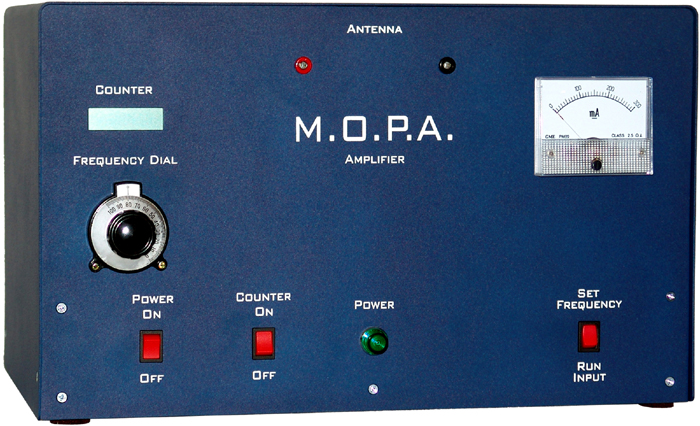
M.O.P.A. Vacuum tube amplifier.
190-watts maximum output.
Built in Frequency counter.
 |